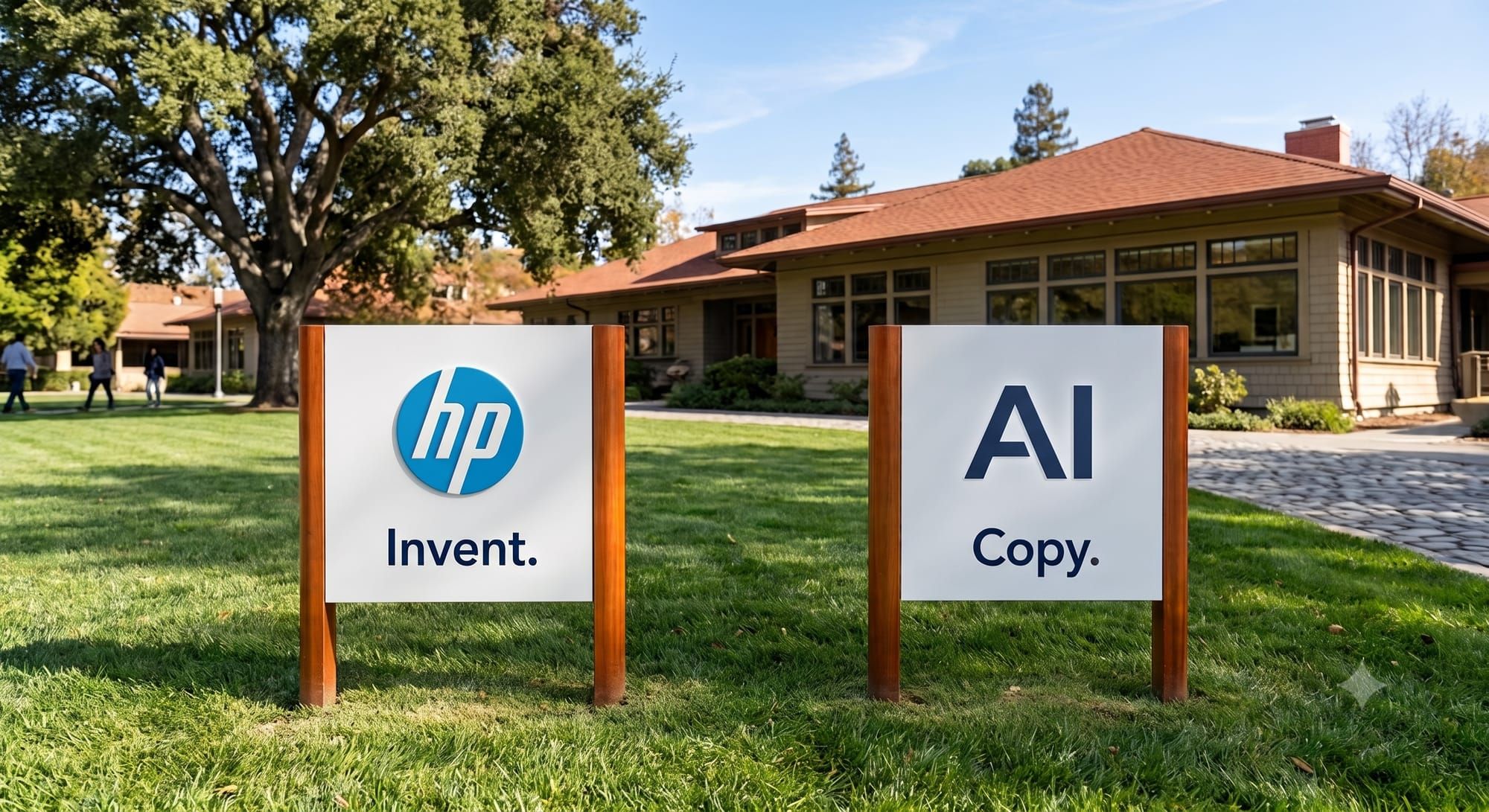
Copying is as old as civilization.
Shakespeare never devised an original plot. He always stole or borrowed - plots, characters, language - from writers very close to him. Hamlet. King Lear. Borrowed. He took stories intact from Raphael Holinshed and from Thomas North's translation of Plutarch. We call him a genius.
In the late 1970s, a revolution was quietly taking place at Xerox PARC - the graphical user interface. Steve Jobs saw it. Took it. Built the Mac. Then accused Microsoft of stealing it from him. Bill Gates's response has never been topped: we both had a rich neighbor named Xerox, and when you broke in to steal the TV, you found I'd already taken it.
Robin Thicke and Pharrell were ordered to pay over $5 million for "Blurred Lines" - copied from Marvin Gaye's "Got to Give It Up." They claimed inspiration. The court said otherwise.
Dan Brown was sued for lifting the research behind The Da Vinci Code from Holy Blood, Holy Grail. He won. The book sold 80 million copies.
Every era copies. Every era argues about it. Now, we find ourselves in love with it.
We don't even avoid the word.
The Old World of Copying
A boss spots a competitor doing something brilliant.
"Learn from them," he says.
The team studies. Adapts. Builds something inspired.
Imperfect.
Copying was always limited - not just by ethics, but by physics. It takes time to dismantle what you built and reconstruct what they built. Resources. Talent. Months. The copy is always a little behind. A little different. A little worse, or sometimes, accidentally, better.
Friction was the firewall.
The New World of Copying
Now the boss says: "Copy everything. Every strategy. Every word. Every move."
And the AI starts.
Not tomorrow. Now.
Done.
Consider: a brand sees a competitor's Instagram presence converting at scale - clean creative, sharp hooks, a consistent visual language. In twenty minutes, an AI has scraped the aesthetic, matched the tone, generated 90 days of content, written the captions, resized the assets, and scheduled the posts. Pixel-perfect. Platform-optimized.
Done.
Or consider this: a D2C company spots a rival's entire go-to-market - pricing tiers, checkout flow, upsell logic, email sequences, even the HTML structure of the sales page. The AI doesn't just learn from it. It rebuilds it. A working replica, live in an afternoon.
The friction is gone.
What took a team six months now takes one person and a lunch break.
Why Copying Is the Edge
Everyone has AI now. Same horsepower. Same models. Same speed.
How to win?
An AI told to "compete" has no shape. It sprawls. A thousand mediocre directions. No target to collapse toward.
Copying gives it a shape.
Point the AI at a proven winner - someone who already cracked the market, already survived real customers - and you hand it a target.
Rebuild what already works. Then be better than that.
That's why copying stopped being lazy and became sharp.
Your competitor spent years and millions finding what works. Your AI inhales it in an afternoon. Starts from the finish line, not the start.
Best-informed AI wins.
Fastest way to inform it? Feed it someone who already won.
Aim high. Find the target. Copy it. Outrun it.